Bali’s culinary landscape offers far more than beautiful beaches and stunning sunsets—it presents a vibrant tapestry of flavors that reflects the island’s rich cultural heritage and agricultural abundance. From aromatic spice pastes to tender slow-cooked meats, understanding what to eat in Bali opens doors to authentic Indonesian experiences that go beyond typical tourist encounters.
The island’s cuisine combines traditional Balinese cooking techniques with influences from across Indonesia, creating dishes that are both deeply rooted in local culture and surprisingly diverse. Whether you’re a digital nomad exploring local warungs or a traveler seeking authentic culinary adventures, Bali’s food scene provides endless opportunities for delicious discoveries.
This comprehensive guide explores the essential dishes that define Balinese cuisine, from everyday staples found in local markets to ceremonial specialties served during important celebrations.
Traditional Balinese rice dishes
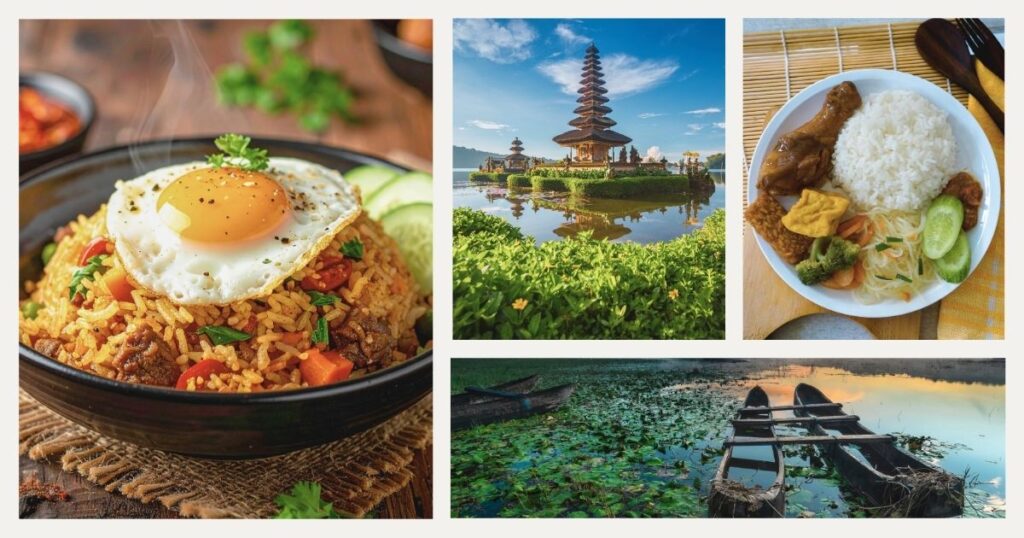
Rice forms the foundation of Balinese cuisine, appearing in countless preparations that showcase the island’s agricultural heritage. Understanding what to eat in Bali begins with exploring these fundamental rice-based dishes.
Nasi goreng: Indonesia’s national dish
Nasi goreng, literally meaning “fried rice,” represents Indonesia’s most internationally recognized dish and serves as an excellent introduction to Balinese flavors. This versatile dish combines day-old rice with aromatic spices, vegetables, and proteins, creating a satisfying meal that varies significantly between regions.
Traditional Balinese nasi goreng incorporates sweet soy sauce (kecap manis), chili paste (sambal), garlic, shallots, and tamarind, creating a complex flavor profile that balances sweet, spicy, and umami elements. Common additions include chicken, prawns, or beef, along with vegetables like bean sprouts and cabbage.
The dish is typically garnished with fried shallots, fresh cucumber slices, and a fried egg, creating textural contrast and visual appeal. Prices at local warungs range from 15,000-25,000 IDR ($1-1.60 USD), making it an affordable and filling option.
Nasi campur: the mixed rice experience
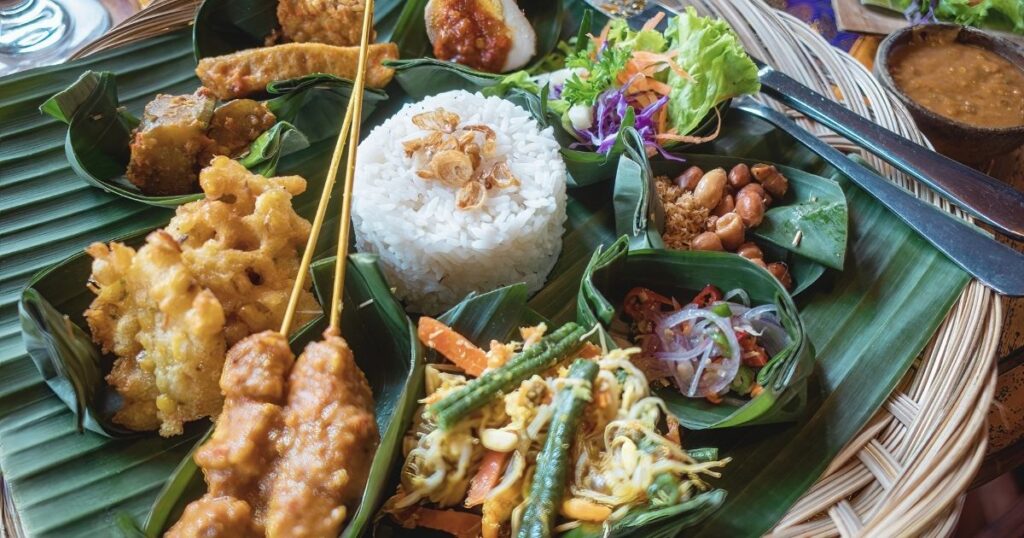
Nasi campur offers perhaps the best introduction to Balinese cuisine’s diversity, presenting white rice accompanied by small portions of various dishes, allowing diners to sample multiple flavors in a single meal.
A typical nasi campur plate includes selections from vegetable dishes, meat or fish preparations, sambals (chili pastes), pickled vegetables, and sometimes traditional snacks like kerupuk (prawn crackers). The combination varies based on the warung’s specialties and daily offerings.
The beauty of nasi campur lies in its customization—you can point to desired dishes, creating a personalized meal that suits your taste preferences. Prices typically range from 20,000-35,000 IDR ($1.30-2.30 USD) depending on the dishes selected.
💡 Did you know? nasi campur translates to “mixed rice,” but the concept embodies the Indonesian philosophy of harmony through diversity, with each component contributing to a balanced and complete meal.
Iconic meat and seafood specialties
Balinese cuisine features numerous meat and seafood preparations that showcase the island’s abundant natural resources and sophisticated cooking techniques.
Bebek betutu: Bali’s ceremonial duck
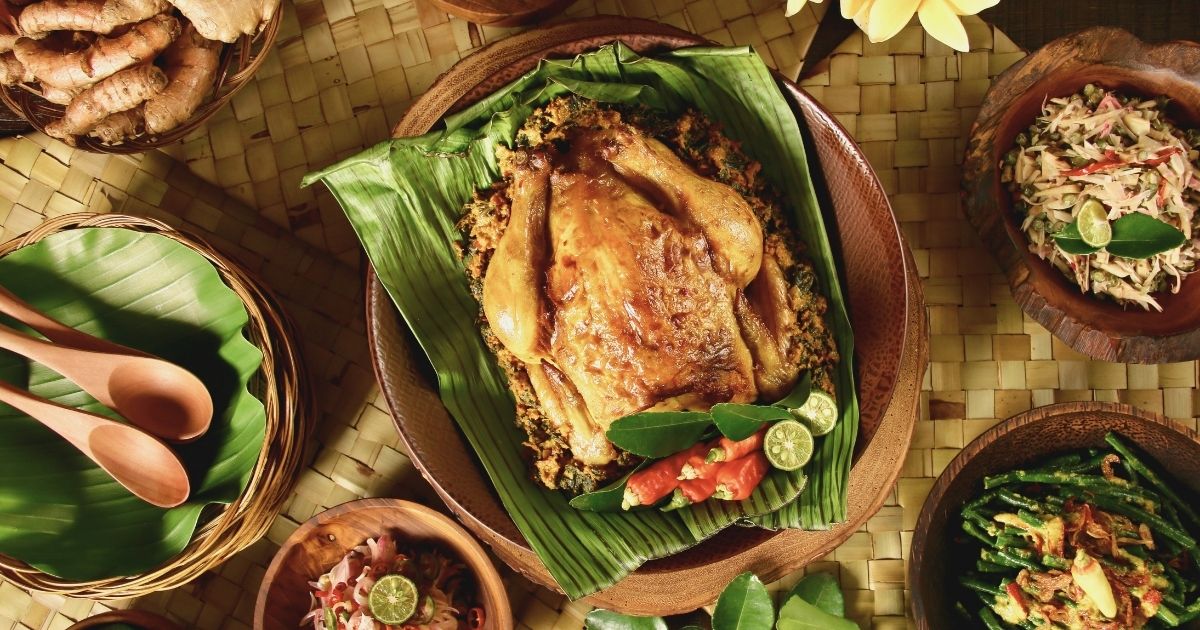
Bebek betutu stands as one of Bali’s most celebrated dishes, representing the pinnacle of traditional Balinese cooking techniques. This slow-roasted duck requires extensive preparation, making it a special occasion dish that demonstrates the island’s culinary sophistication.
The preparation involves stuffing a whole duck with aromatic spice paste containing galangal, ginger, turmeric, coriander, candlenuts, and chili peppers. The stuffed duck is then wrapped in aromatic leaves and slow-roasted for 6-8 hours, resulting in incredibly tender meat infused with complex spice flavors.
Finding authentic bebek betutu requires planning, as most restaurants require advance ordering due to the lengthy cooking process. Prices range from 150,000-300,000 IDR ($10-20 USD) per portion, reflecting the time-intensive preparation.
Sate lilit: unique Balinese satay
Sate lilit represents Bali’s unique contribution to Indonesia’s satay tradition, featuring minced meat wrapped around lemongrass stalks rather than the typical skewered chunks found elsewhere in Indonesia.
The preparation involves mixing minced fish, chicken, or pork with grated coconut, lime leaves, galangal, chili, and other spices, creating a flavorful paste that’s formed around aromatic lemongrass stalks. The mixture is then grilled, allowing the lemongrass to infuse the meat with subtle citrus notes.
Sate lilit costs approximately 3,000-5,000 IDR ($0.20-0.33 USD) per stick, making it an affordable and authentic snack option.
🌟 Pro tip: when trying sate lilit, don’t eat the lemongrass stalk—it serves as both a skewer and flavoring agent but isn’t meant to be consumed.
Essential vegetable dishes and street food
Balinese cuisine includes numerous vegetable preparations and street food options that provide balance and nutrition to complement rice and protein dishes.
Gado-gado: the Indonesian salad
Gado-gado presents a perfect example of Indonesian cuisine’s ability to create satisfying dishes from simple vegetables, representing one of the most popular answers to what to eat in Bali for health-conscious travelers.
This “mixed salad” combines blanched vegetables like cabbage, bean sprouts, spinach, and long beans with hard-boiled eggs, tofu, tempeh, and sometimes lontong (compressed rice cakes). The magic lies in the rich peanut sauce that ties all components together.
The peanut sauce combines ground peanuts with palm sugar, tamarind, chili, garlic, and coconut milk, creating a creamy, sweet, spicy, and tangy dressing. Prices range from 18,000-30,000 IDR ($1.20-2 USD).
Bakso: Indonesia’s beloved meatball soup
Bakso serves as Indonesia’s comfort food, featuring tender meatballs in aromatic broth that provides satisfying warmth and nutrition at affordable prices.
Traditional bakso combines beef or chicken meatballs with fresh noodles, vegetables, and sometimes tofu in a clear, flavorful broth seasoned with garlic, ginger, and various spices. Street vendors often prepare bakso fresh throughout the day, with mobile carts appearing in neighborhoods and markets.
The interactive nature of ordering—pointing to desired meatballs and additions—makes bakso accessible even for travelers with limited Indonesian language skills. Prices typically range from 15,000-25,000 IDR ($1-1.60 USD).
Pisang goreng: crispy fried bananas
Pisang goreng represents one of Indonesia’s most beloved snacks, transforming simple bananas into crispy, golden treats. The preparation involves coating ripe bananas in seasoned batter before deep-frying until golden and crispy.
Different vendors use various batter recipes, with some including rice flour for extra crispiness or coconut for added flavor. Prices range from 5,000-10,000 IDR ($0.33-0.66 USD) for generous portions.
For staying connected while exploring Bali’s diverse culinary landscape and sharing your food discoveries, Holafly’s Indonesia travel connectivity ensures you can research restaurants, translate menus, and share your culinary adventures without worrying about expensive roaming charges.
Regional specialties and where to find them
Different areas of Bali specialize in particular dishes, making location selection important for experiencing the full range of what to eat in Bali.
Ubud: center for traditional cuisine
Ubud’s reputation as Bali’s cultural heart extends to its culinary scene, where traditional warungs coexist with innovative restaurants focusing on organic preparations. The area’s abundance of organic farms has created unique fusion opportunities while maintaining respect for traditional preparations.
Ubud offers excellent opportunities to try traditional dishes like bebek betutu, lawar, and various sambals in authentic settings. The town’s concentration of cooking classes also provides hands-on learning opportunities.
Coastal areas: fresh seafood specialties
Bali’s coastal regions—including Jimbaran, Sanur, and various beach areas—specialize in fresh seafood preparations that showcase the island’s marine abundance.
Jimbaran Bay has become famous for its beachfront seafood dining, where restaurants grill fresh fish directly on the sand while diners enjoy sunset views. Prices vary based on fish type and size, but expect to pay 50,000-150,000 IDR ($3.30-10 USD) for grilled fish dinners.
Denpasar: authentic local markets
Denpasar offers the most authentic local food experiences through its traditional markets and neighborhood warungs that serve primarily local customers. Markets like Pasar Badung provide opportunities to observe local food culture and sample snacks that rarely appear in tourist-oriented establishments.
Dining etiquette and cultural considerations
Understanding local dining customs enhances your culinary experience and demonstrates respect for Balinese culture when exploring what to eat in Bali.
Traditional eating customs
Balinese dining traditionally involves eating with the right hand, as the left hand is considered unclean in Indonesian culture. While utensils are commonly available, learning to eat rice and other dishes with your hand can enhance authenticity.
Sharing dishes is common in Indonesian dining culture, with multiple dishes placed in the center of the table for everyone to sample. Taking only what you can finish shows respect for food and resources.
Spice levels and dietary accommodations
Balinese cuisine can be quite spicy, particularly dishes containing sambal or chili-based sauces. When unsure about spice levels, ask for “tidak pedas” (not spicy) or “sedikit pedas” (a little spicy) to avoid overwhelming heat.
Vegetarian options are widely available due to Hindu influences and the prevalence of tofu and tempeh. However, some vegetable dishes may contain shrimp paste, so specify “vegetarian” clearly when ordering.
🌟 Pro tip: learn basic Indonesian phrases for dietary restrictions: “saya vegetarian” (I’m vegetarian), “tidak makan daging babi” (no pork), or “alergi kacang” (allergic to peanuts) to communicate your needs clearly.
Final thoughts on Bali’s culinary journey
Exploring what to eat in Bali reveals a cuisine that goes far beyond simple tourist fare, offering deep cultural insights and authentic flavor experiences that reflect the island’s rich heritage. From humble street food stalls to elaborate ceremonial dishes, Bali’s culinary landscape provides endless opportunities for discovery and enjoyment.
The key to successful culinary exploration lies in approaching local food with an open mind and respectful curiosity. Start with familiar dishes like nasi goreng or gado-gado before progressing to more adventurous options like bebek betutu. This gradual approach allows your palate to adjust while building confidence.
Remember that food represents more than mere sustenance in Balinese culture—it embodies community, tradition, and spiritual significance. Approaching meals with appreciation for these deeper meanings enhances both your dining experience and cultural understanding.
For comprehensive guidance on living and working in Indonesia while exploring its culinary treasures, check out Indonesia’s digital nomad visa options to ensure you can legally enjoy Bali’s incredible food scene during extended stays.
For more comprehensive guidance on living costs and practical tips for life in Indonesia, check out Nomada’s complete Indonesia resources to enhance every aspect of your island experience.Ready to explore Bali’s incredible culinary landscape?
Let Nomada guide you through every aspect of your Indonesian food adventure with expert advice, practical resources, and insider knowledge to make your culinary dreams come true 🍜
Frequently asked questions about what to eat in Bali
Essential dishes include nasi goreng (fried rice), bebek betutu (slow-roasted duck), gado-gado (vegetable salad with peanut sauce), sate lilit (Balinese satay), and ikan bakar (grilled fish). These dishes represent the core of Balinese cuisine and offer excellent introductions to local flavors and cooking techniques.
Spice levels vary significantly between dishes and restaurants. Many traditional dishes include chili-based sambals that can be quite hot, but you can always request “tidak pedas” (not spicy) or ask for sambal on the side. Start with milder dishes and gradually work up to spicier options.
Local warungs (small family-run restaurants) typically offer the most authentic and affordable experiences. Ubud provides excellent traditional options, while coastal areas specialize in fresh seafood. Denpasar’s local markets offer the most authentic local food culture.
Yes, Balinese cuisine includes many vegetarian dishes due to Hindu influences and the prevalence of tofu and tempeh. Gado-gado, various vegetable curries, and rice dishes offer excellent vegetarian options. However, some dishes may contain shrimp paste, so specify “vegetarian” clearly.
Street food and local warungs offer meals from 15,000-35,000 IDR ($1-2.30 USD), while mid-range restaurants charge 50,000-100,000 IDR ($3.30-6.60 USD) per dish. Special dishes like bebek betutu cost 150,000-300,000 IDR ($10-20 USD). Tourist areas generally charge higher prices.
Use your right hand for eating and passing food, as the left hand is considered unclean. Sharing dishes is common and encouraged. Take only what you can finish to show respect for food and resources. Learning basic Indonesian phrases for dietary restrictions helps communicate your needs clearly.