Navigating Bali’s diverse landscapes—from bustling Denpasar streets to serene Ubud rice terraces—requires understanding your transportation options and choosing the right method for each journey. Whether you’re a digital nomad commuting to coworking spaces, a traveler exploring hidden temples, or an adventure seeker chasing the perfect sunset, knowing how to get around in Bali efficiently and safely transforms your island experience.
The island’s transportation ecosystem ranges from traditional options like bemos (local minibuses) to modern ride-sharing apps, each serving different needs and budgets. Your choice depends on factors like distance, destination, luggage, weather conditions, and personal comfort preferences.
This comprehensive guide explores every transportation method available in Bali, from the freedom of renting a scooter to the convenience of private drivers. We’ll cover costs, safety considerations, and practical tips to help you navigate like a local.
Scooter rentals: the most popular way to get around in Bali
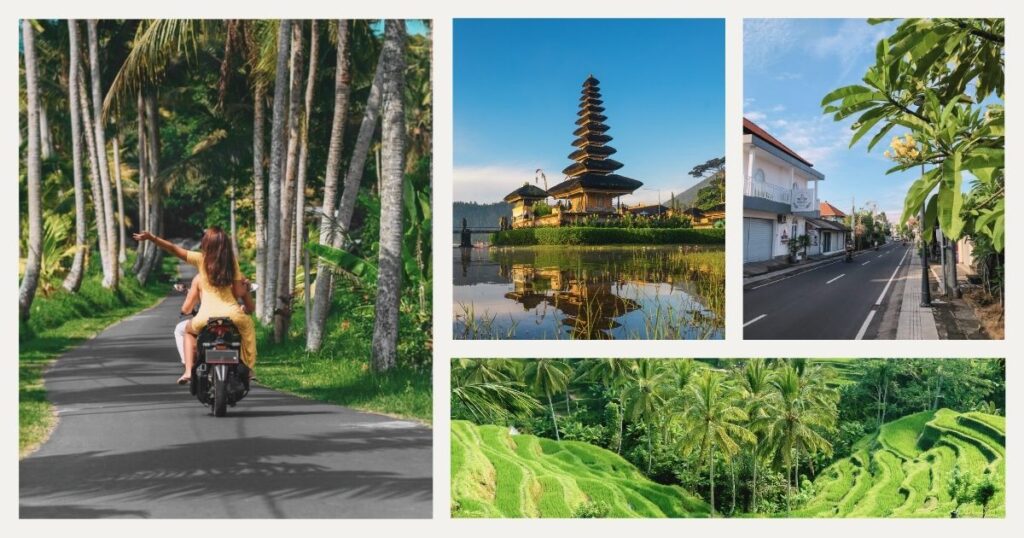
Scooter rentals represent the most flexible and economical transportation option for exploring Bali independently. With over 4 million motorbikes on the island, scooters dominate Bali’s roads and offer unparalleled access to locations that cars cannot reach.
Rental process and requirements
Renting a scooter in Bali is remarkably straightforward, with rental shops found throughout tourist areas. Daily rates typically range from 50,000-80,000 IDR ($3.30-5.30 USD), while weekly rentals offer better value at 300,000-450,000 IDR ($20-30 USD). Monthly rates can drop as low as 800,000-1,200,000 IDR ($53-80 USD) for long-term stays.
Most rental shops require only a copy of your passport and a cash deposit, though having an international driving permit provides legal protection and simplifies police interactions. The deposit usually ranges from 1,000,000-2,000,000 IDR ($66-133 USD).
Inspection before rental is crucial—check brakes, lights, horn, fuel gauge, and tire condition. Document existing damage with photos to avoid disputes when returning the scooter.
Safety considerations and traffic navigation
Understanding how to get around in Bali safely on a scooter requires adapting to local traffic patterns. Balinese traffic follows unofficial hierarchies where larger vehicles have the right of way, and lane markings serve as suggestions rather than strict boundaries.
Essential safety practices include defensive driving, maintaining safe following distances, and avoiding nighttime riding when possible. Traffic congestion peaks during rush hours (7-9 AM and 5-7 PM), particularly on major routes connecting tourist areas.
Weather significantly impacts riding conditions—sudden tropical downpours can create slippery roads and reduced visibility. Many experienced riders carry rain gear and seek shelter during heavy downpours.
🌟 Pro tip: practice riding in quiet areas before venturing into busy traffic. Bali’s unique traffic flow takes time to understand, and building confidence in low-stress environments prevents accidents in challenging situations.
Ride-sharing apps and online transportation
Modern ride-sharing services have revolutionized how to get around in Bali, providing safe, convenient, and affordable transportation options with transparent pricing and GPS tracking.
Grab: the leading ride-sharing platform
Grab dominates Bali’s ride-sharing market, offering multiple service levels from basic motorcycle taxis to premium cars. GrabBike (motorcycle taxi) provides the fastest option for short distances, typically costing 8,000-15,000 IDR ($0.53-1 USD) for trips under 5 kilometers.
GrabCar offers air-conditioned comfort for longer journeys or when carrying luggage, with prices ranging from 15,000-40,000 IDR ($1-2.60 USD) for short trips and 40,000-80,000 IDR ($2.60-5.30 USD) for cross-town journeys.
The app’s transparency eliminates haggling while providing estimated arrival times and driver tracking. Payment options include cash, GrabPay digital wallet, or linked credit cards.
Gojek: comprehensive service platform
Gojek offers similar transportation services while expanding into food delivery, shopping, and other on-demand services. GoRide (motorcycle taxi) provides competitive pricing to GrabBike, while GoCar serves as an alternative to GrabCar with similar pricing structures.
The platform’s strength lies in its integration with other services—you can order food delivery, shop for groceries, or book cleaning services through the same app.
For reliable connectivity while using ride-sharing apps and staying connected throughout your Bali adventures, Holafly’s seamless eSIM connectivity ensures you can book rides, navigate, and communicate with drivers without worrying about local SIM card complications.
Private drivers and car rentals
Private drivers and car rentals offer comfort, safety, and local expertise, making them excellent choices for day trips, airport transfers, and exploring multiple destinations efficiently.
Hiring private drivers
Private drivers provide personalized service with local knowledge, typically charging 500,000-700,000 IDR ($33-46 USD) for full-day excursions (8-10 hours) including fuel. Half-day rates range from 300,000-450,000 IDR ($20-30 USD) for 4-5 hour trips.
Quality drivers offer more than transportation—they serve as informal guides, recommend restaurants, suggest photo opportunities, and help navigate cultural sites. Many speak conversational English and understand tourist interests.
Booking methods include hotel concierges, online platforms, direct contact through recommendations, or approaching drivers at popular tourist locations.
Self-drive car rentals
Car rentals provide independence while offering protection from weather and secure storage for belongings. Daily rates for basic vehicles start around 250,000-350,000 IDR ($16.50-23 USD), while SUVs and automatic transmissions cost 400,000-600,000 IDR ($26.50-40 USD) daily.
Rental requirements include valid driver’s license, international driving permit, passport copy, and credit card for deposit. Insurance options vary from basic coverage to comprehensive policies covering theft, damage, and third-party liability.
Self-driving allows flexible scheduling but requires confidence navigating Bali’s challenging traffic conditions.
💡 Did you know? Many car rental companies offer GPS navigation systems, but downloading offline maps to your smartphone provides backup navigation when GPS signals are weak in rural areas.
Public transportation and traditional options
While limited compared to Western standards, Bali’s public transportation provides budget-friendly options for understanding how to get around in Bali like locals do.
Bemos: traditional local transport
Bemos (shared minivans) serve as Bali’s traditional public transport, following fixed routes and charging minimal fares of 3,000-8,000 IDR ($0.20-0.53 USD) per journey. These vehicles operate primarily between major towns, serving local communities rather than tourists.
Routes connect major population centers like Denpasar, Singaraja, and Ubud, though schedules remain informal and departures depend on passenger loads. Bemos stop running in the early evening, limiting their usefulness for nighttime travel.
Kura-Kura bus and modern options
The Kura-Kura bus system specifically targets tourists with air-conditioned vehicles, fixed schedules, and routes connecting major tourist areas. Fares range from 20,000-50,000 IDR ($1.30-3.30 USD) depending on distance.
Routes include connections between the airport, Kuta, Legian, Seminyak, Nusa Dua, and Ubud, with limited frequency (every 2-3 hours). While more comfortable than bemos, limited coverage and infrequent schedules restrict practical utility.
Traditional taxis
Blue Bird taxis represent the gold standard for traditional taxi service, featuring metered fares, air conditioning, and professionally trained drivers. Base fares start around 7,000 IDR ($0.46 USD) with distance-based charges adding approximately 6,500 IDR ($0.43 USD) per kilometer.
Unofficial taxis operate throughout tourist areas, offering negotiated flat rates rather than metered service. While potentially cheaper for longer journeys, these options require negotiation skills and careful vehicle assessment.
🌟 Pro tip: always agree on the final destination and total price before starting your journey. Tourist areas often have inflated initial quotes, but polite negotiation can reduce prices significantly.
Digital nomad transportation strategies

For digital nomads, understanding how to get around in Bali efficiently impacts productivity, budget management, and quality of life during extended stays.
Establishing transportation routines
Digital nomads benefit from establishing consistent transportation routines that support work schedules while maintaining flexibility for exploration. Many nomads rent monthly scooters for daily commuting while using ride-sharing for evening activities or weather-dependent situations.
Location selection significantly impacts transportation needs—living in walkable areas like central Ubud or beachfront Canggu reduces daily transportation requirements while providing easy access to cafes, restaurants, and social activities.
Cost management and budgeting
Monthly transportation budgets vary dramatically based on lifestyle choices. Budget-conscious nomads spending primarily on scooter rentals can maintain transportation costs under $60 USD monthly. Mid-range budgets incorporating regular ride-sharing and occasional private drivers typically range from $80-150 USD monthly.
Tracking transportation expenses helps identify cost optimization opportunities—many nomads discover that strategic location choices reduce transportation needs more effectively than seeking cheaper transportation options.
Seasonal considerations
During the wet season (November-March), heavy rainfall creates transportation challenges for all methods. Scooter riding becomes dangerous during downpours, while flooded roads can disrupt car travel.
Smart wet season strategies include flexible scheduling that accommodates weather delays, carrying quality rain gear, and identifying covered parking and shelter options along common routes.
For comprehensive guidance on legal working arrangements in Indonesia, including visa requirements that support extended stays, explore Indonesia’s driver’s license requirements to ensure your transportation choices remain legal and properly documented.
Final thoughts on getting around in Bali
Mastering how to get around in Bali opens up the island’s incredible diversity and transforms your experience from tourist to temporary resident. Each transportation method serves different needs—scooters for daily flexibility, ride-sharing for convenience, private drivers for comfort, and public transport for authentic local experiences.
The key to successful Bali transportation lies in matching methods to specific situations rather than relying on single solutions. Safety should always remain the top priority, regardless of chosen transportation method, and your transportation choices significantly impact your overall Bali experience.
Whether you choose the freedom of a scooter, the convenience of ride-sharing, or the comfort of private drivers, understanding your options ensures you can explore this incredible island efficiently and safely.
For more comprehensive guidance on living and working in Indonesia, including legal requirements and practical tips, check out Nomada’s complete Indonesia resources to enhance every aspect of your island experience.
Ready to explore Bali with confidence? Let Nomada guide you through every aspect of your Indonesian adventure with expert advice, practical resources, and insider knowledge to make your transportation dreams come true 🛵
Frequently asked questions about best ways to get around in Bali
Bemos (local minivans) offer the cheapest option at 3,000-8,000 IDR ($0.20-0.53) per trip, though they have limited routes and schedules. For practical daily transport, monthly scooter rentals (800,000-1,200,000 IDR or $53-80) provide the best value for extended stays, while GrabBike offers affordable short-distance trips at 8,000-15,000 IDR ($0.53-1).
Yes, legally you need an international driving permit to operate any motor vehicle in Indonesia, including scooters. While some rental shops don’t require it, having proper documentation protects you during police checkpoints and ensures insurance coverage in case of accidents. Apply for an IDP in your home country before traveling.
Grab and Gojek are generally safe and reliable, offering transparent pricing, GPS tracking, and driver ratings. These apps work well in tourist areas and major towns, though coverage may be limited in remote locations. Always verify the driver and vehicle details match the app information before getting in.
Private drivers offer the best combination of comfort, local knowledge, and flexibility for day trips, typically costing 500,000-700,000 IDR ($33-46) for 8-10 hours including fuel. They can suggest routes, wait at attractions, and handle navigation while you enjoy the scenery. Self-drive car rental is an alternative if you’re comfortable with Bali’s traffic.
Budget-conscious travelers can manage on $60 USD monthly with a rental scooter plus occasional ride-sharing. Mid-range budgets of $80-150 USD accommodate regular ride-sharing and occasional private drivers. Premium budgets exceeding $200 USD include frequent private drivers and premium services. Your budget depends on location, lifestyle, and transportation preferences.
Scooter riding requires caution and adaptation to local traffic patterns. While millions ride safely daily, risks include chaotic traffic, varying road conditions, and weather challenges. Start with quiet practice areas, always wear helmets, avoid night riding initially, and respect that larger vehicles have unofficial right-of-way. Consider your riding experience before choosing this option.